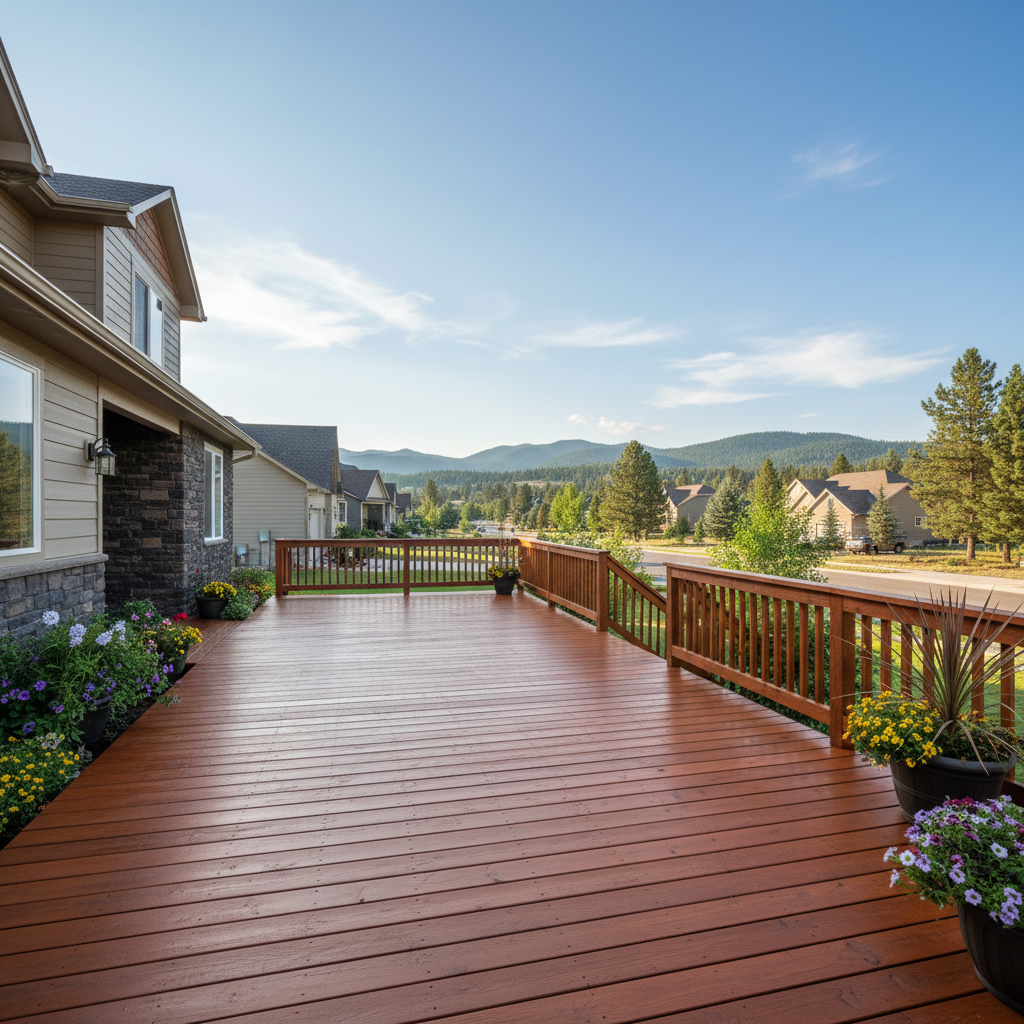
Is your deck looking a little tired? Maybe it's faded, peeling, or just not shedding water like it used to. I see this all the time, especially on homes built up in the Rattlesnake or down by the river, where they really get hit with a lot of sun and moisture. People often think deck staining is a simple weekend warrior job, and sometimes it can be, but here in Missoula, our climate throws some real curveballs that make it trickier than you might expect.
The Missoula Weather Challenge for Decks
You know how it is around here. We get those long, hot, dry summers that bake everything, followed by wet, snowy winters with freeze-thaw cycles that can really do a number on wood. Then spring hits, and it's a mix of rain, sun, and sometimes even more snow. That constant expansion and contraction, plus the UV radiation from our intense summer sun, is brutal on any exterior wood surface. A deck, being flat and collecting moisture, gets it particularly bad.
I've seen decks in the University District, beautiful cedar ones, start to gray and splinter within a couple of years if they weren't protected properly. It's not just about how it looks; it's about structural integrity. Once water starts getting into the wood, that's when you get rot, mildew, and eventually, expensive repairs or even a full replacement. Nobody wants to deal with that, right?
Choosing the Right Stain: It's Not One-Size-Fits-All
Walk into any big box store, and you'll see a dozen different deck stains. Transparent, semi-transparent, solid, oil-based, water-based... it's enough to make your head spin. Here's what I've learned from years of working on decks all over Missoula: the "best" stain really depends on your deck's condition, the type of wood, and what you expect in terms of maintenance and appearance.
- Transparent or Semi-Transparent Stains: These are great if you love the natural look of your wood and it's in good shape. They offer decent UV protection and let the grain show through. But, they do need more frequent reapplication, usually every 2-3 years, especially in high-traffic areas or on decks that get full sun all day.
- Solid Stains: Think of these more like a thin paint. They cover the wood grain completely but still let the wood breathe. Solid stains offer the best UV protection and typically last longer, often 3-5 years. They're a good choice for older, weathered decks where you want to hide imperfections, or if you're going for a more uniform, painted look.
- Oil-Based vs. Water-Based: This is a big one. Oil-based stains soak deeper into the wood, giving excellent protection and a rich finish. They can be a bit trickier to apply and clean up, and they take longer to dry. Water-based stains are easier to work with, dry faster, and often have lower VOCs. However, some don't penetrate as deeply, so you need to pick a high-quality one. For our climate, I often lean towards oil-based for their durability, but advancements in water-based technology mean there are some really good options there too.
What I always tell folks is, don't just grab the cheapest can. Think about how much sun your deck gets, how much foot traffic, and how often you're willing to re-stain. A little extra investment in a quality product now can save you a lot of headache and money down the road.
The Importance of Proper Preparation
This is where most DIY deck staining projects go wrong. You can buy the best stain on the market, but if you don't prepare the surface correctly, it's just not going to last. I can't stress this enough. Preparation is probably 70% of the job.
First, you've got to clean it. We're talking about removing all the dirt, grime, mildew, and old, loose stain. Power washing is usually involved, but you have to be careful not to damage the wood. Too much pressure can splinter it, especially softer woods like pine. Then, a good deck cleaner or brightener often comes into play to restore the wood's natural pH and open up the pores for better stain penetration. After that, it needs to dry completely. And I mean *completely*. If you stain over damp wood, you're just trapping moisture, which leads to peeling and mildew.
I've seen decks up in Grant Creek where folks skipped the cleaning, and within a year, the new stain was flaking off in sheets because it didn't stick properly. It's a total waste of time, money, and effort.
Why Local Expertise Matters for Your Missoula Deck
You might think, "It's just staining a deck, how much difference can a local company make?" A lot, actually. We understand the specific challenges our Missoula environment presents. We know which products hold up best against the intense UV we get in July and August, and which ones can handle the snow and ice of January.
We're familiar with the common wood types used in homes around here, whether it's pressure-treated pine in newer developments out in Frenchtown or the older fir and cedar decks in places like the Slant Street neighborhood. We know how those different woods react to various stains and how to prep them correctly.
When you call Missoula Painting Company, you're not just getting someone who knows how to apply stain. You're getting someone who understands the local conditions, who can recommend the right product for your specific deck and situation, and who knows how to prepare the surface so the stain actually lasts. We've seen what works and, more importantly, what doesn't work in our unique climate.
Protecting your deck isn't just about making it look good; it's about preserving your home's value and extending the life of an important outdoor living space. Don't let our beautiful but challenging Missoula weather get the best of your deck.