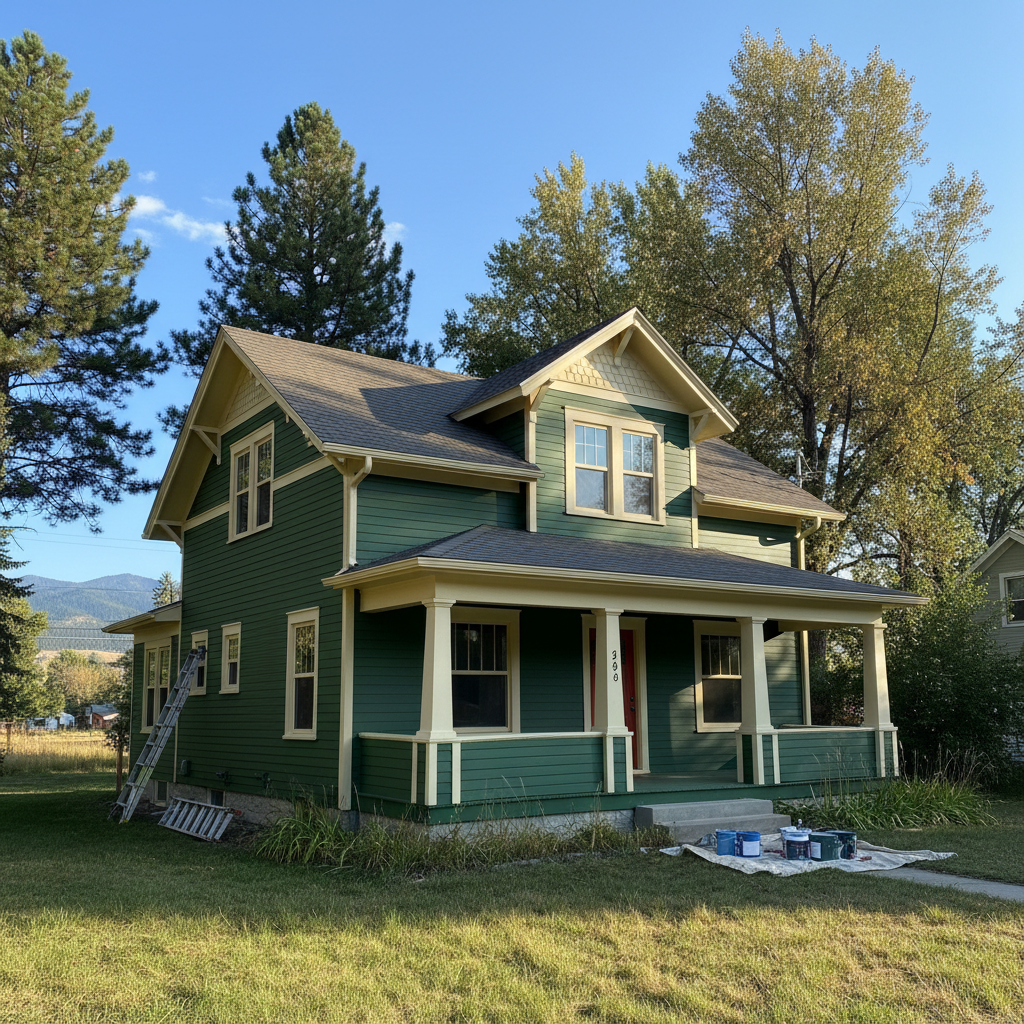
What's the real deal with painting your house in Missoula? That's probably the first thing you're wondering, and I totally get it. Nobody wants to get ripped off, right? You deserve to know exactly what your money is buying. I've been in this business a long time, seen all sorts of jobs. Let's talk about the actual numbers you can expect.
What Makes Exterior Painting Cost What It Does?
A lot of things factor into the final price. It's not just about how big your house is, though that's a major point. Think of it this way: every house is a little different, and some need a whole lot more TLC before we even think about putting paint on the siding.
- Size and Stories: This one's pretty obvious, isn't it? A sprawling single-story ranch in the Rattlesnake neighborhood will naturally cost less than a three-story Victorian downtown. More surface area means more paint, more labor, and often more time spent setting up ladders or scaffolding.
- Condition of Existing Surfaces: This is a huge factor. If your current paint is peeling, flaking, or chalking badly, we've got a lot more prep work ahead of us. That means scraping, sanding, priming, and sometimes even replacing rotten wood. If your siding is in good shape, though, a good wash and light prep might be all it needs. Bad prep equals bad paint, plain and simple.
- Type of Siding: Different materials need different approaches. Wood siding often requires more prep and can soak up more paint than, say, stucco or vinyl. Aluminum siding can get tricky if it's oxidized.
- Paint Quality: You really do get what you pay for here. I always tell folks to use high-quality exterior paints. They last longer, stand up better to our Missoula winters and hot summers, and honestly, they just look better for years. Cheaper paint might save you a few bucks upfront, but you'll be repainting sooner than you'd like. We typically stick with premium acrylic latex paints that really hold up to our climate.
- Complexity and Details: Lots of trim work, intricate architectural bits, multiple colors, or hard-to-reach areas will definitely add to the labor time. Windows, doors, soffits, fascia, and railings all need careful attention.
- Accessibility: Is your house on a steep slope? Are there bushes and trees right up against the house that we'll need to carefully work around? The easier it is to get to the work areas, the less time the job takes.
Typical Cost Ranges in Missoula
Alright, let's get down to some actual numbers. These are general ranges for a standard exterior repaint, assuming decent prep, good quality paint, and a professional crew. Just remember, these are averages, and your specific project could fall outside them depending on all those factors I just mentioned.
- Small Homes (1,000-1,500 sq ft): Think a smaller bungalow or a single-story home. You're generally looking at $3,500 - $6,500.
- Medium Homes (1,500-2,500 sq ft): This covers a lot of the homes you see around town. For these, expect to pay $6,000 - $10,000.
- Larger Homes (2,500-4,000+ sq ft): Bigger houses, more stories, more complex designs. These can range from $9,500 to $18,000 or even more.
These numbers cover labor, materials (paint, primer, caulk, etc.), and all the necessary prep work. If you're getting quotes significantly lower than these, you should be very wary. They might be cutting corners on prep, using cheap paint, or not carrying proper insurance.
What Should a Good Quote Include?
When I give you a quote from Missoula Painting, I make sure it's clear and comprehensive. You shouldn't ever have to guess what's covered.
- Detailed Scope of Work: This should list exactly what areas we'll paint (siding, trim, doors, windows, fascia, soffits, etc.) and what colors will be used for each.
- Preparation Steps: It needs to outline the prep work: power washing, scraping loose paint, sanding, patching minor cracks/holes, caulking, and priming.
- Number of Coats: Typically, it's two coats of finish paint over properly prepped surfaces. Sometimes one coat is enough if the color change is minimal and the surface is perfect, but that's pretty rare.
- Paint Type and Brand: We specify the exact type and brand of paint we'll be using. You should know if you're getting a premium product.
- Timeline: An estimated start and completion date.
- Warranty: A clear statement of the warranty on labor and materials.
- Insurance and Licensing: Confirmation that the contractor is licensed and insured. Don't ever work with someone who isn't.
How to Avoid Overpaying
You want a fair price for quality work, not the cheapest bid or the most expensive one. Here's how to make sure you're getting a good deal without sacrificing quality.
- Get Multiple Bids: Three bids is usually a good number. Make sure they're all bidding on the exact same scope of work so you can compare apples to apples.
- Check References and Reviews: A reputable painter will have plenty of happy customers. Look for reviews online or ask for references.
- Don't Go for the Lowest Bid Automatically: The cheapest bid often means corners are being cut. This could be using low-quality paint, rushing prep work, or not carrying proper insurance. Those