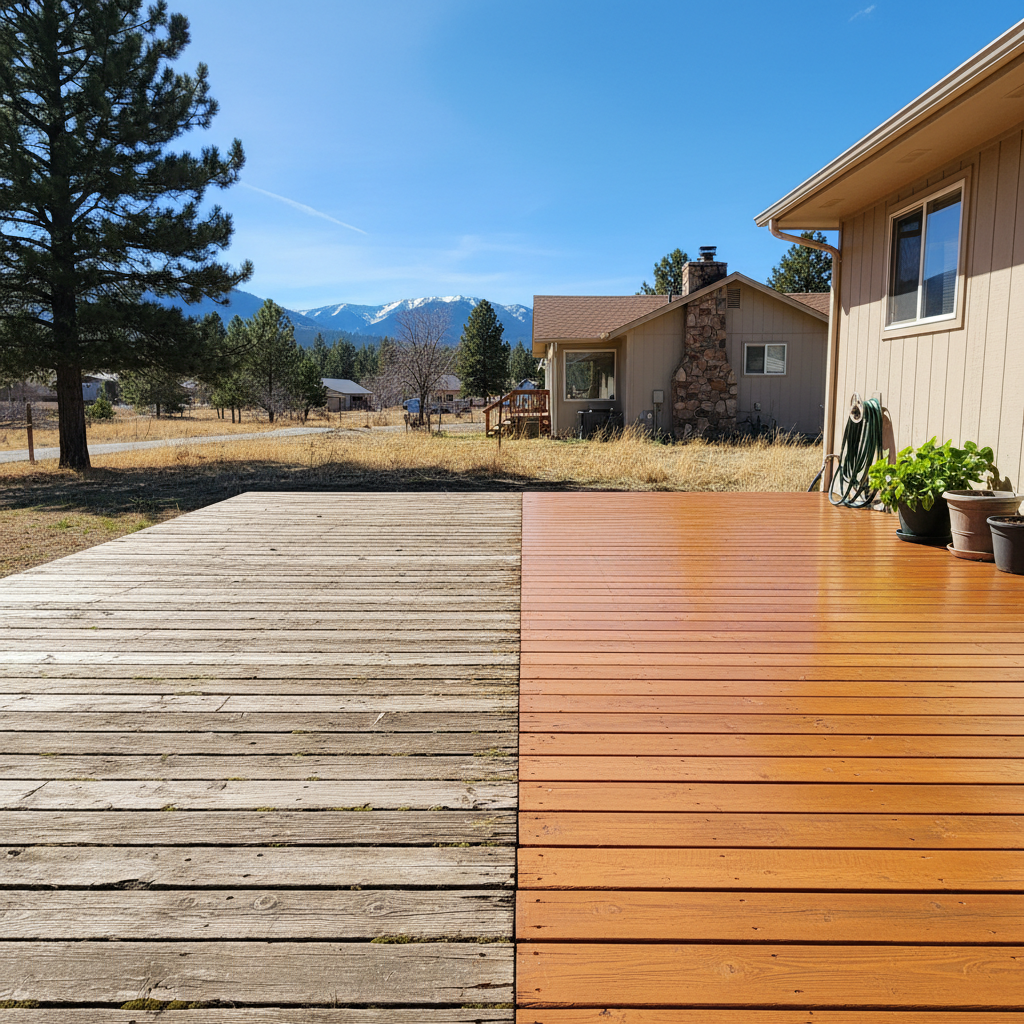
Got a deck that's seen better days, or maybe you're building a new one and thinking about how to protect it? Good. That's smart. One of the biggest decisions you'll face is what kind of stain to put on it. Around Missoula, I see a lot of folks wrestling with this: transparent or solid?
Both have their place, but they're not created equal, especially when you factor in our crazy Montana weather. We get those harsh winters, hot summers, and plenty of UV exposure. Let's talk about what each option brings to the table.
Transparent & Semi-Transparent Stains: The Natural Look
When you hear 'transparent' or 'semi-transparent' stain, think of something that lets the natural beauty of the wood grain show through. It's like putting sunglasses on your deck – it protects, but you can still see everything underneath. The difference between transparent and semi-transparent is just how much pigment is in there. Transparent has very little, semi-transparent has a bit more, adding a subtle tint.
Appearance:
This is where transparent stains shine. If you've got a beautiful cedar or redwood deck, or even a nice pressure-treated pine that you want to show off, a transparent or semi-transparent stain is the way to go. It enhances the wood's natural color and grain. It looks rich, natural, and really lets the wood be the star.
Durability & Protection:
Here's the rub. While they look great, transparent stains offer the least protection against UV rays and moisture. They penetrate the wood, which is good for preventing rot from the inside out, but they don't form a thick protective film on the surface. That means they'll fade and wear faster, especially in high-traffic areas or spots that get a lot of sun. You'll likely see them needing a refresh every 1-3 years, depending on the product and exposure.
Maintenance:
Re-applying a transparent stain is usually pretty straightforward. You'll need to clean the deck thoroughly, maybe do a light sanding, and then apply another coat. You usually don't have to strip it down to bare wood every time, which saves some effort.
Cost:
The upfront cost for the stain itself might be a little less than solid, but because you're re-applying it more often, your long-term maintenance costs can add up. Labor for application is similar per coat, but you'll be paying for it more frequently.
Solid Stains: The Paint-Like Finish
Now, solid stains are a different beast entirely. Think of them as a very thick, durable paint that still lets the wood breathe a bit. They contain a lot of pigment, so they completely obscure the wood grain. If your deck is looking a little rough, or you want a uniform color, this is your huckleberry.
Appearance:
Solid stains give your deck a uniform, opaque color. It looks more like a painted surface than a stained one. This is great for older decks with blemishes, mismatched boards, or if you just want to match your deck to your house trim or siding. You won't see the wood grain anymore, but you'll get a consistent, fresh look.
Durability & Protection:
This is where solid stains win, hands down, especially for our Missoula climate. That thick layer of pigment offers superior protection against UV damage, moisture, and foot traffic. It forms a durable film on the surface that resists cracking and peeling better than transparent options. You can expect a solid stain to last 3-7 years, sometimes even longer with good prep and quality product.
Maintenance:
When it's time to re-stain a solid deck, the prep can be a bit more involved. If there's any peeling or flaking, you'll need to scrape and sand those areas down. Sometimes, a full stripping might be necessary if the old stain is failing badly. But because it lasts longer, you're doing this less often.
Cost:
The stain itself might be a bit more expensive per gallon, and the prep work for re-application can sometimes be more labor-intensive if you have to deal with peeling. However, since you're doing it less frequently, your overall cost of ownership often ends up being lower in the long run.
So, What's My Recommendation for Missoula Homeowners?
Alright, if you're asking me, and you've got a deck that's going to be exposed to the elements year-round – which, let's be honest, most decks in Missoula are, especially those out in places like the Rattlesnake or up by Miller Creek where they get full sun and snow – I'm generally going to lean towards a solid stain.
Why? Because of our climate. The intense UV we get in the summer, followed by the deep freezes and snow cover in the winter, is just brutal on wood. A transparent stain, while beautiful, is just going to break down faster. You'll be re-staining every couple of years, and that's a lot of work or a lot of money if you're hiring it out.
A solid stain gives you the best protection and the most bang for your buck in terms of longevity. It's more forgiving on older wood too. If your deck is brand new, made of a gorgeous exotic hardwood, and you're committed to more frequent maintenance, then sure, a transparent or semi-transparent can be stunning. But for most folks, for most decks, especially those that are already a few years old and showing some wear, a solid stain is the practical, durable choice.
Now, this isn't to say Missoula Painting Company won't apply a transparent stain if that's what you truly want. We will. But I want you to go into it with open eyes, knowing what to expect. My job is to give you the straight scoop so you can make the best decision for your home and your wallet.